

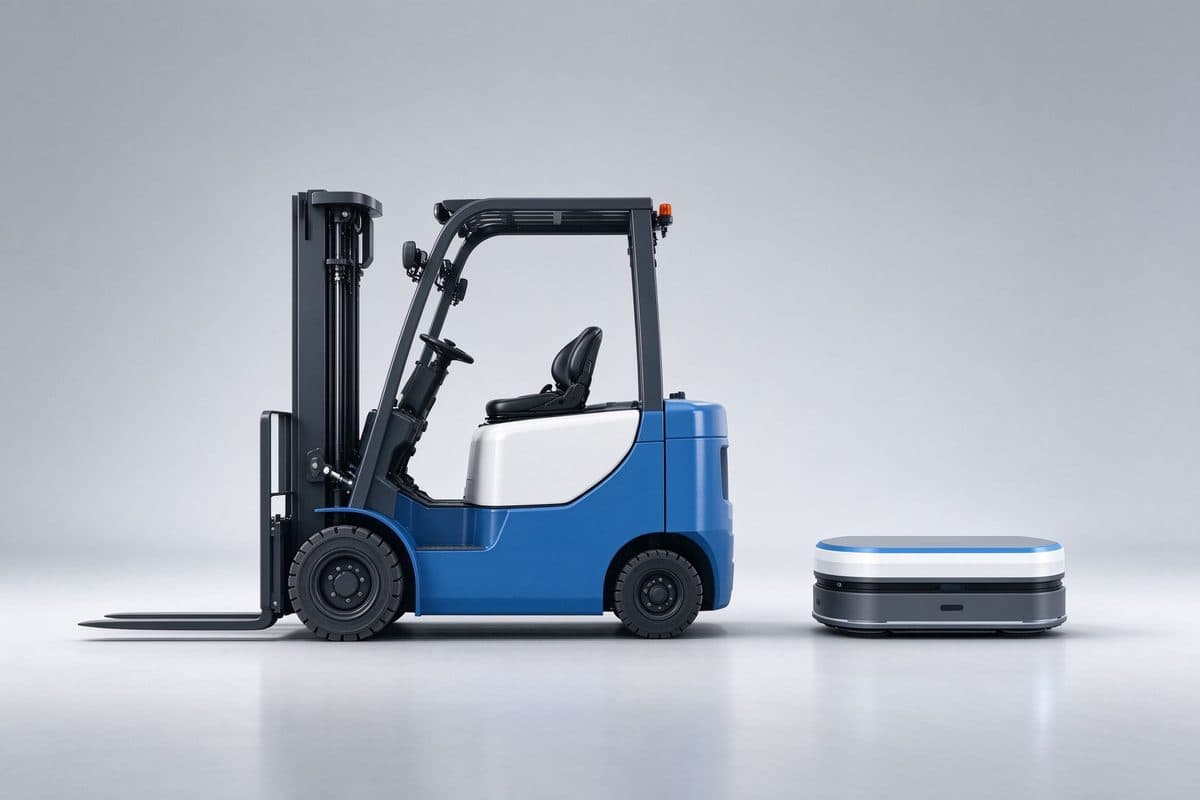
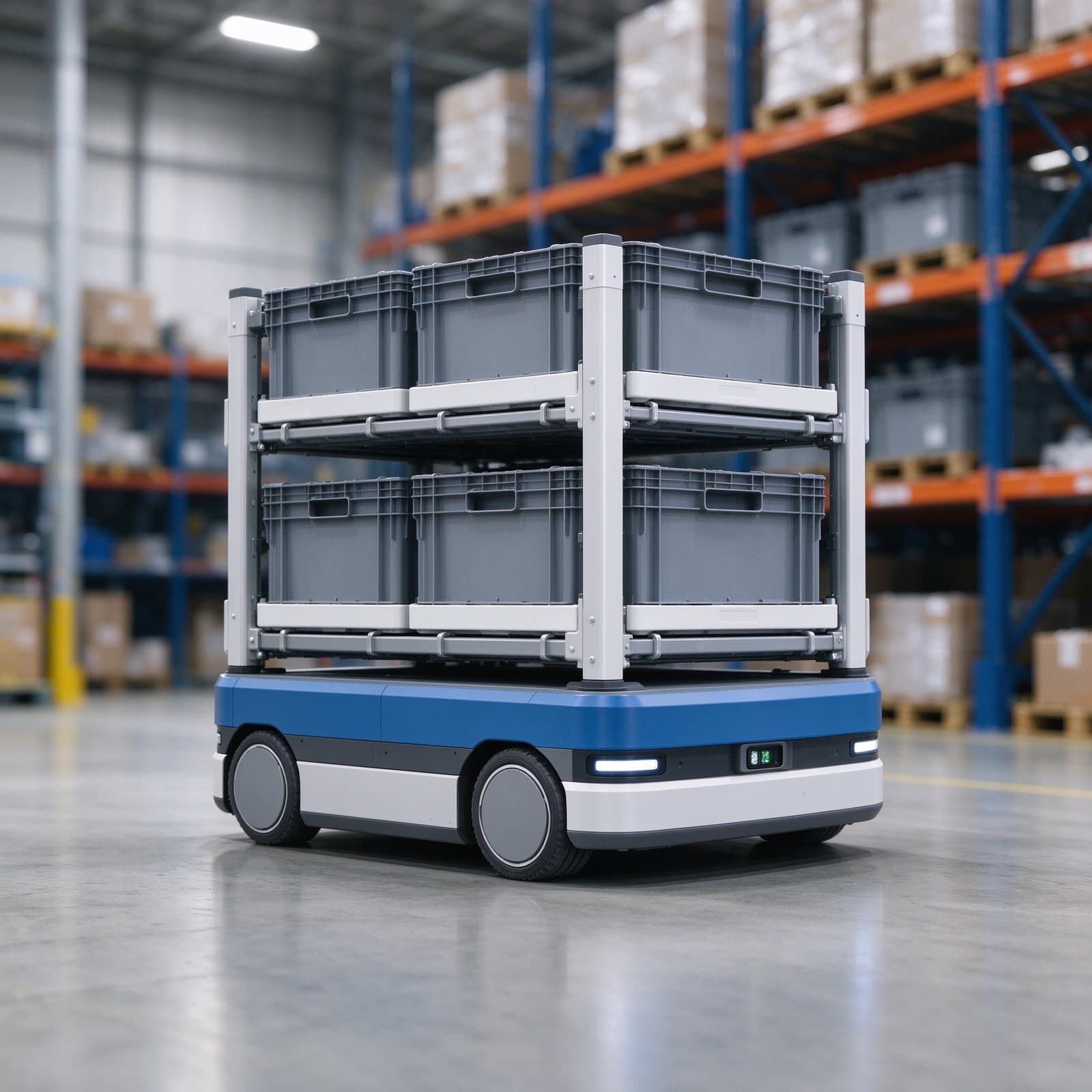
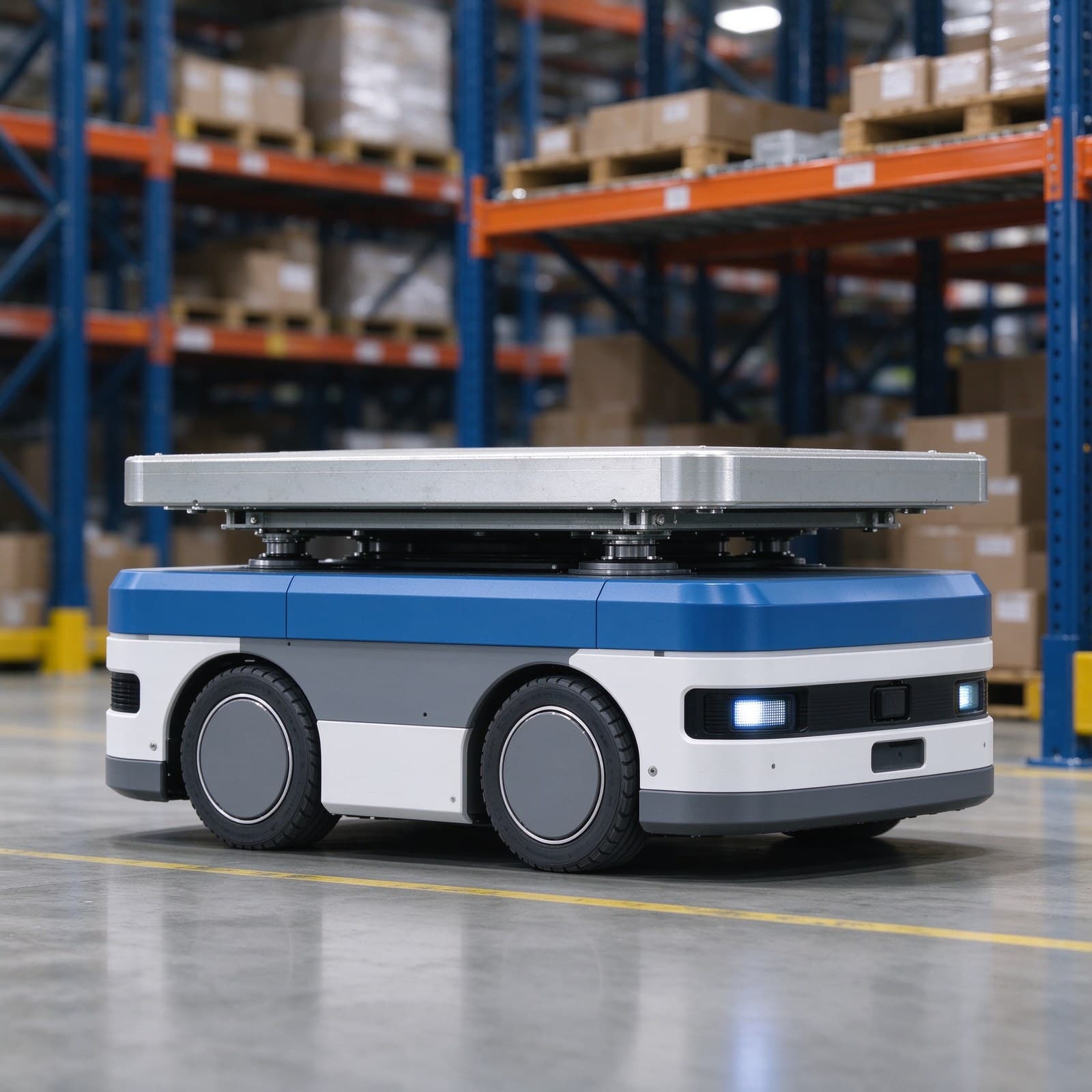
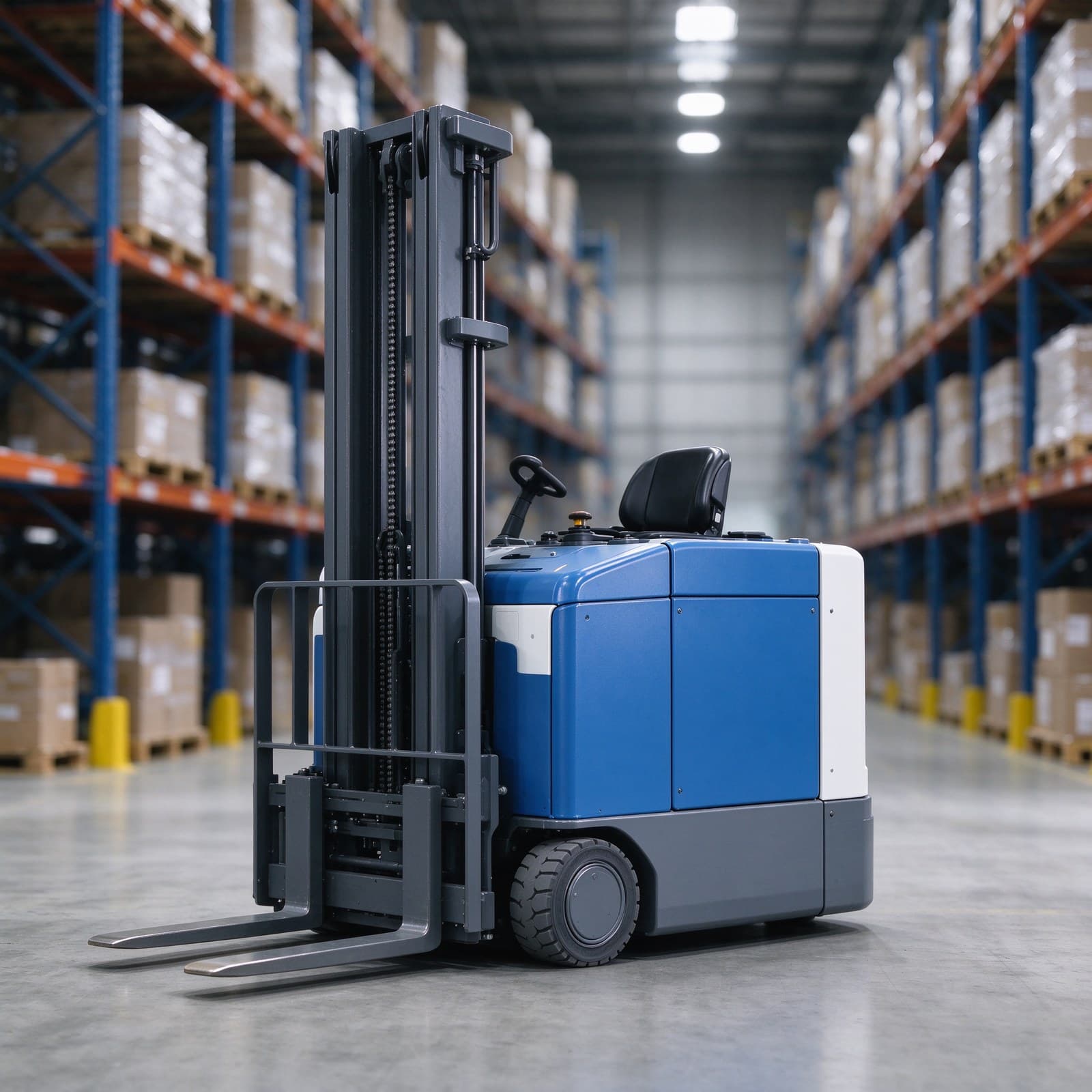
Warehouses today face unprecedented pressure to ship faster, keep inventory accurate, and do it all with leaner teams. A laser navigation AGV for warehouse operations has emerged as a practical way to automate material flows without the rigidity (and expense) of fixed conveyors or wire-guided systems. In this guide, we cut through the marketing hype to explain how laser-guided AGVs work, which types fit different facilities, and exactly what to evaluate before you commit budget.
How Laser Navigation AGVs Work (and Why It Matters)
Laser navigation relies on a top-mounted or vehicle-integrated LiDAR sensor that scans reflective markers, natural features, or pre-mapped landmarks to triangulate the robot’s position. This Simultaneous Localization and Mapping (SLAM) approach delivers centimeter-level accuracy, enabling vehicles to navigate congested aisles, dock doors, and multi-zone layouts without physical guide wires.
The core advantage is flexibility: change an aisle layout or reroute traffic during peak season, and the fleet adapts via software updates rather than costly hardware re-installation. Whether you choose natural navigation using existing structural features or a reflector-based setup for complex environments, the operational principle remains the same—precision positioning with minimal infrastructure.
Types of Laser Navigation AGVs for Warehouse Use
Not all warehouse AGV systems are interchangeable. Understanding the distinctions helps you match technology to your workflow:
- Pallet-moving AGVs: Designed for heavy loads, these automated forklift trucks or pallet movers transport SKUs from receiving to putaway, replenishment, and staging.
- Light-load AGVs: Ideal for tote-level transport, these robots support e-commerce fulfillment and kit-building operations requiring high-frequency, low-weight moves.
- Hybrid omnidirectional models: Equipped with mecanum wheels or differential drives, these offer tight turning radii for narrow aisles and spotting precision.
- Pallet shuttles and rack-moving AGVs: Specialized for deep-freeze or high-density storage where maneuverability is critical.
Each type varies in payload capacity (typically 500 kg to 2,000 kg+), speed (up to 2.0 m/s), and navigation reliability in dynamic environments.
Key Advantages Over Conventional Warehouse Automation
- Rapid deployment: Laser-guided systems require minimal site preparation. Installation often takes days, not months, compared to conveyor lines.
- Seamless scalability: Add vehicles incrementally without redesigning your layout. Software-defined routing handles fleet expansion automatically.
- Reduced labor dependency: Operate two or three shifts autonomously, mitigating labor shortages and turnover costs.
- Enhanced safety: Integrated LiDAR, 3D cameras, and safety scanners prevent collisions with personnel, racking, and obstacles.
- Data-driven insights: Fleet management software tracks KPIs like utilization, battery health, and traffic bottlenecks in real time.
For logistics managers, this translates to 24/7 operational continuity, fewer picking errors, and a tangible ROI—often within 18–24 months for high-volume operations.
Selection Guide: What to Evaluate Before You Buy
Investing in a laser navigation AGV system demands careful consideration of both technical and commercial factors:
- Load capacity and center of gravity: Match payload to your typical unit loads. Overloading reduces accuracy and lifespan.
- Environmental conditions: Reflective markers degrade in extreme temperatures, dust, or low-visibility zones. Some systems offer IP65-rated sensors for cold storage or food-grade facilities.
- Navigation reliability: Ask vendors about accuracy guarantees (±10 mm vs ±50 mm) and how the system handles feature-poor environments.
- Fleet management software: Demand open APIs for integration with WMS, MES, or ERP systems. Closed ecosystems lock you into single-vendor upgrades.
- Safety certifications: Look for ISO 3691-4 compliance, CE marking, and functional safety ratings (e.g., SIL 2).
- Service network: Verify local technician availability, spare parts supply, and warranty terms—especially for robots operating in remote distribution centers.
- Total cost of ownership: Compare not just unit price, but integration, training, energy, maintenance, and downtime costs over a 5-year horizon.
Real-World Application Cases
A manufacturer of consumer electronics in Shenzhen deployed 12 pallet-moving AGVs across a 12,000 m² warehouse, linking production lines to shipping bays. Within six months, stockroom labor costs dropped 45%, and order fulfillment accuracy rose from 99.1% to 99.8%. The system’s ROI stood at 22 months.
Another example: a European 3PL provider integrated autonomous mobile robots into a multi-client fulfillment center, achieving 30% higher throughput during peak season without additional staffing.
Final Thoughts and Next Steps
A laser navigation AGV for warehouse use is no longer experimental—it’s a proven, scalable solution for optimizing material flow. By understanding the technology, evaluating vendors rigorously, and planning your integration roadmap, you position your operation to outperform competitors in speed, accuracy, and cost efficiency.
If you are looking for a reliable AGV supplier from China, feel free to contact us for a customized solution tailored to your facility, budget, and throughput goals. We provide end-to-end support from feasibility studies to after-sales maintenance, helping you transition to smart warehouse automation with confidence.
Frequently Asked Questions (FAQ)
Q: What is the difference between laser navigation and magnetic guidance for AGVs?
A: Laser navigation uses LiDAR and maps to navigate flexibly with minimal infrastructure, while magnetic guidance relies on embedded wires or tape—offering stable paths but requiring physical installation and difficult reconfiguration.
Q: How accurate is a laser-guided AGV in a dynamic warehouse?
A: Typically ±10 mm to ±50 mm accuracy under normal conditions. Advanced SLAM algorithms maintain precision even with moving forklifts, though dense clutter may temporarily reduce accuracy until the map is updated.
Q: What maintenance does a laser navigation AGV require?
A: Routine maintenance includes sensor cleaning, battery management (for lithium-ion models), and periodic software updates. Most systems require less than 2 hours per month of preventive maintenance, minimizing downtime.