

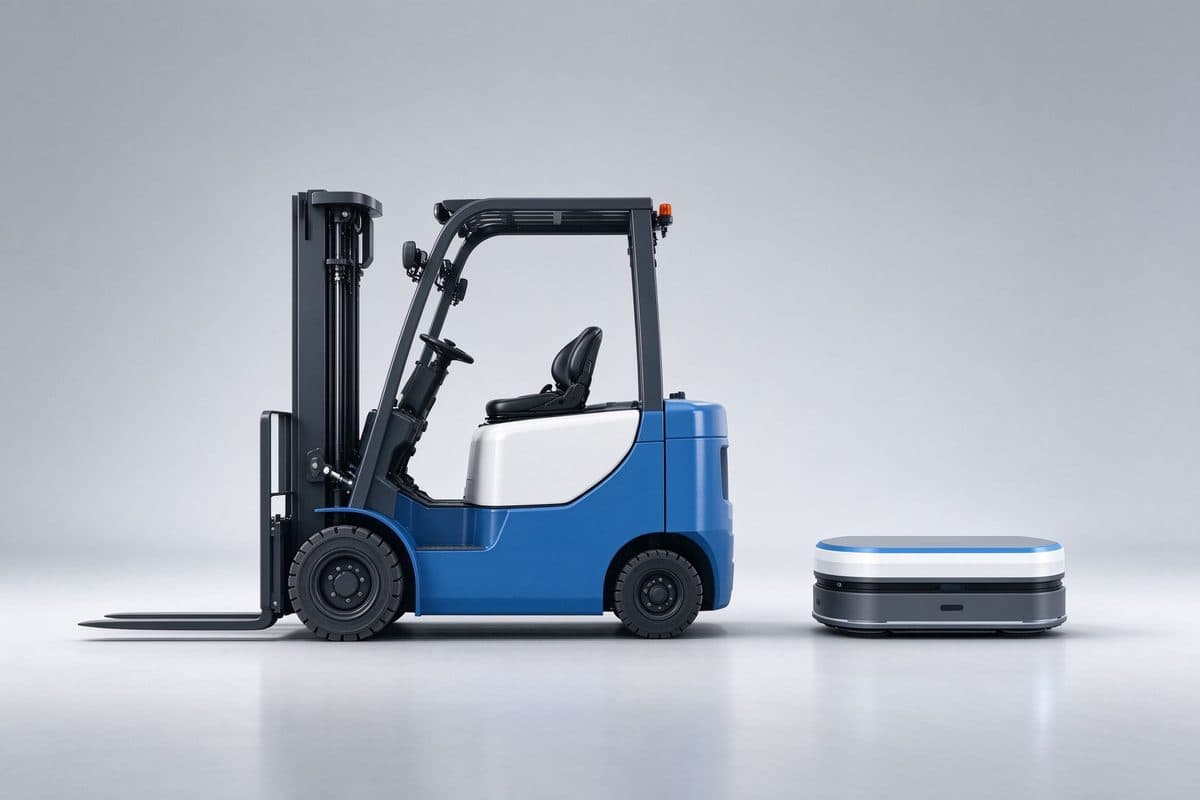
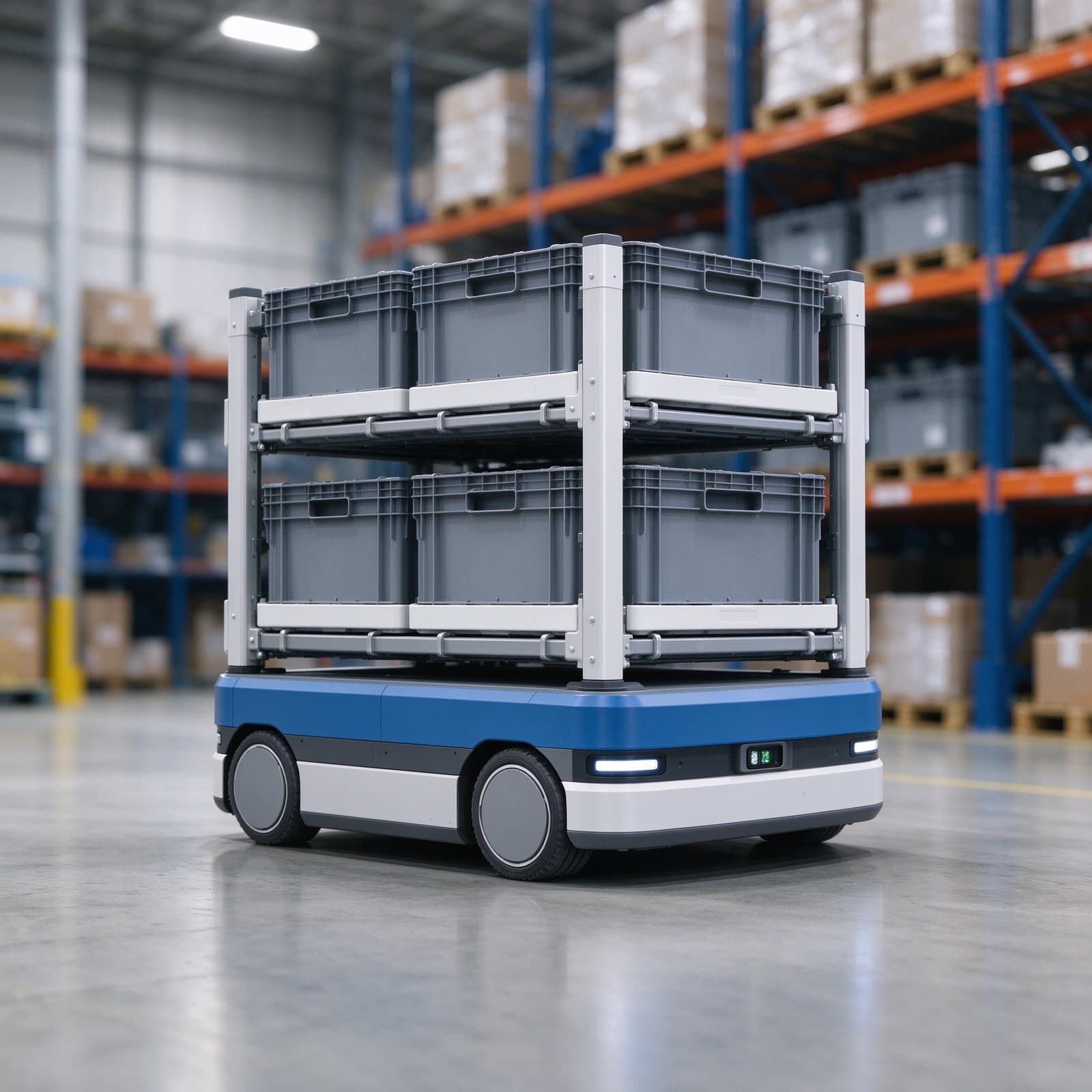
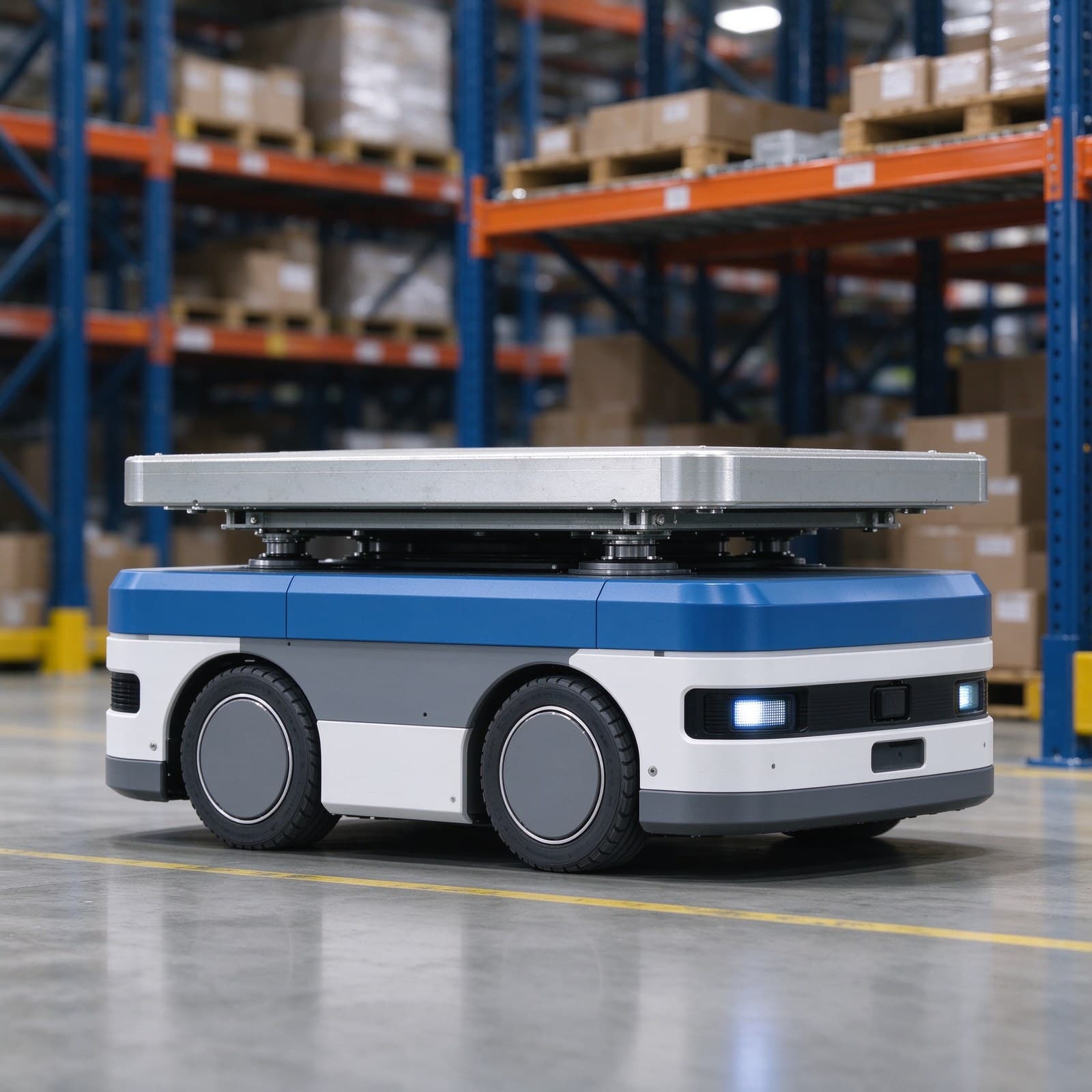
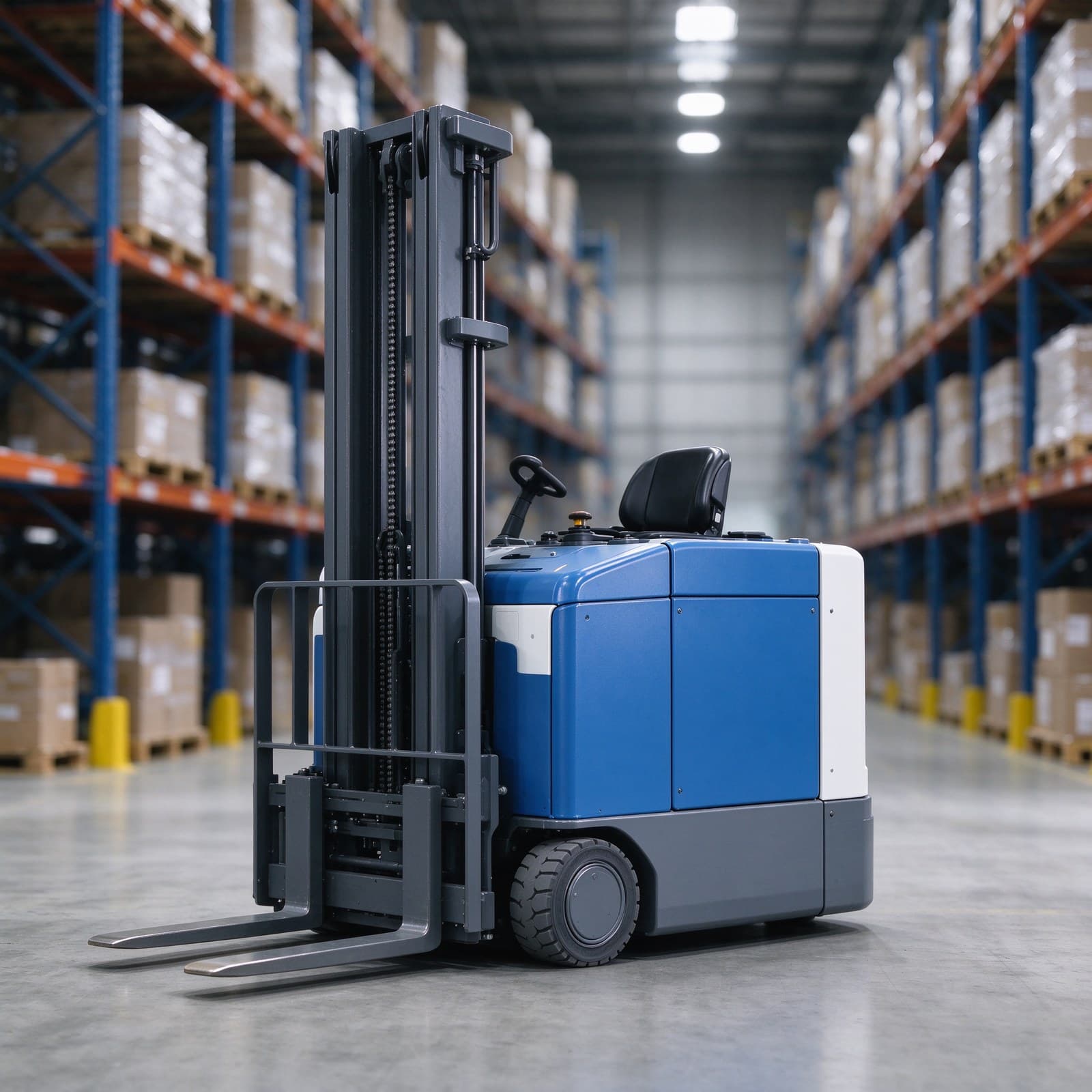
AGV localization technology tells an automated guided vehicle exactly where it is and what is around it — and understanding how it works is the first step toward choosing the right system for your facility. Whether you are evaluating a laser-guided AGV, a vision-based mobile robot, or a magnetic tape solution, every AGV depends on accurate positioning to navigate safely, dock precisely, and operate without a human operator. In practice, AGV localization is rarely a single technology. It is a combination of sensors, reference markers, and software that together deliver real-time positioning accuracy, obstacle avoidance, and reliable fleet performance. This guide breaks down how AGV localization works, compares the main AGV navigation methods, and offers practical advice for buyers and automation engineers.
How AGV Localization Works: The Core Principle
At its simplest, AGV localization answers two questions continuously: “Where am I?” and “What is near me?” Most systems determine position through triangulation — measuring the distance from the vehicle to fixed reference points and calculating position from those measurements. A laser-guided AGV, for example, spins a lidar sensor that scans for reflective tape or receivers mounted along the route, using trigonometry to pinpoint itself within millimeters.
Modern systems go further. SLAM — Simultaneous Localization and Mapping — allows an AGV to build a map of its environment and localize itself within it at the same time, much the way a person navigates a familiar building using visual landmarks. The localization module feeds data to the AGV navigation software, which plans the path, while collision-avoidance sensors handle dynamic obstacles such as pallets, workers, or forklifts. The result is a continuous loop of sensing, positioning, and motion control that keeps the fleet moving safely and efficiently.
The Main Types of AGV Localization
There is no universal best AGV localization method. The right choice depends on your floor plan, traffic density, budget, and how often the layout changes. Here is how the most common approaches work.
| Method | How It Works | Accuracy | Best For |
|---|---|---|---|
| Laser reflection | Lidar measures distance to fixed reflectors | ±5–10 mm | Flexible routes, heavy-duty AGVs |
| Magnetic tape | Onboard sensors read a buried or taped wire | High on-path repeatability | Fixed, straight-line paths |
| QR code | Camera reads codes on the floor | ±10–50 mm | Dense, grid-based warehouse layouts |
| SLAM (natural navigation) | Sensors map the environment; no site modification | Varies by environment | Dynamic, frequently changing floors |
| Vision-based | Cameras compare live images to stored maps | High, in good lighting | Smart factories needing flexible navigation |
Magnetic tape systems are the most cost-effective for simple routes, but rerouting means physically reinstalling tape. Laser guidance offers mid-range flexibility and is widely used for industrial AGVs in manufacturing plants. SLAM and vision-based AGV navigation require no infrastructure changes, making them attractive for facilities that reconfigure layouts frequently. QR code navigation strikes a balance — it is affordable, precise, and easy to install.
Why Localization Accuracy Matters for Your Operation
Positioning accuracy directly affects throughput. An AGV that docks within 5 mm can transfer loads directly to roller conveyors or shelf-side picking stations without manual adjustment, whereas a less accurate system may need buffer gaps, reducing usable space. Precise localization also reduces downtime: when an AGV knows exactly where it is, fleet management software can prevent collisions, optimize traffic flow, and schedule maintenance proactively.
For warehouse managers, the business impact translates into measurable gains. Improved positioning accuracy means tighter racking layouts, since AGVs can operate safely with reduced clearance between shelves and walls, directly increasing storage density. Enhanced docking precision eliminates the repositioning delays that often slow down automated pick-and-place operations, boosting line-side delivery efficiency. Furthermore, reliable localization reduces unplanned downtime caused by positioning errors or collision avoidance activations, ensuring a shorter return on investment for automation projects.
Choosing the Right AGV Localization for Your Facility
When comparing AGV systems, start with your environment. A clean, stable factory floor with fixed routes suits magnetic or laser guidance, while a dynamic warehouse with frequent layout changes favors SLAM or vision-based AGVs. Next, define your accuracy requirements — docking tasks demand tighter tolerances than simple point-to-point transport. Finally, weigh the initial cost against long-term flexibility: infrastructure-free SLAM systems often save money when layouts evolve, even if the upfront price is higher. A reputable supplier will help you map these trade-offs with real data from facilities similar to yours.
Real-World Applications
Automotive parts plants use laser-guided AGVs to deliver engine components to assembly lines with zero human intervention, while e-commerce fulfillment centers deploy fleets of QR-code-navigated AGVs to move totes from storage to packing stations around the clock. Even outdoor operations benefit: heavy-duty AGVs serving steel yards or ports rely on GPS-enhanced localization to move multi-ton loads across large, open areas. In every case, the localization method determines how flexibly, safely, and efficiently the fleet performs.
Conclusion
Understanding AGV localization technology — how it works, what options exist, and how to evaluate them — is the foundation of a successful automation project. The right localization method keeps your AGVs precise, safe, and productive from day one. If you are sourcing reliable AGV solutions from China, contact our team to discuss a customized navigation solution tailored to your facility and budget.
Frequently Asked Questions
What is the difference between magnetic and laser AGV guidance? Magnetic AGVs follow a physical tape or wire, offering the lowest initial cost but limited flexibility. Laser-guided AGVs use reflected laser beams and fixed reflectors, enabling more flexible routing without rewiring.
Can AGV localization work outdoors? Yes. Heavy-duty AGVs for outdoor use combine GPS with laser or visual SLAM localization to maintain position in large yards, docks, and factory entrances.
How much infrastructure does AGV localization require? It varies. Magnetic systems need tape or cables installed, laser systems require reflectors, while SLAM-based AGVs need no site modification at all — a key advantage for changing layouts.